

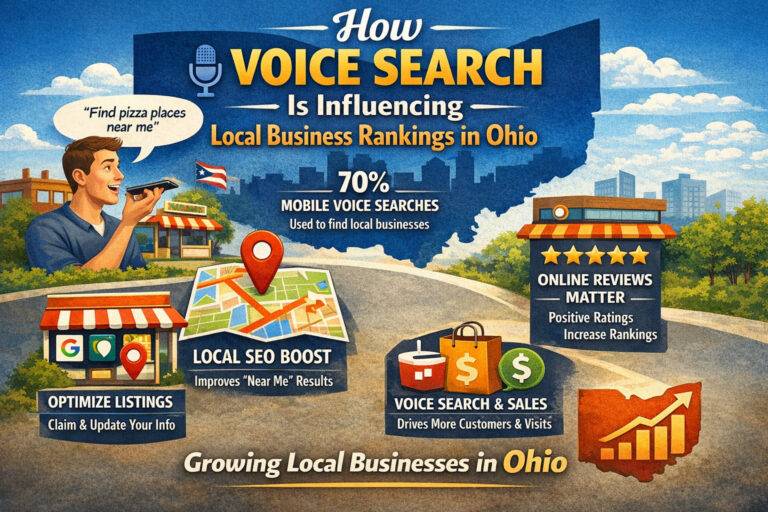
Voice search has become a normal part of how people in Ohio find nearby businesses. Many users now speak full questions into their phones, vehicles, and smart speakers instead of typing short search terms.
This change affects how local businesses appear in search results, especially in map-based listings. Businesses that once relied on websites alone now need to ensure their local data is accurate and easy for voice systems to interpret.
This article explains how voice search works, how it influences local rankings in Ohio, and what business owners need to understand to stay visible.
How Voice-Based Searching Became Part of Everyday Local Searches
Voice search allows users to speak queries aloud. The device then:
- Converts speech into text
- Identifies the intent behind the question
- Delivers a relevant answer based on location and context
For local searches, voice systems prioritize speed and accuracy. Most users asking voice questions are looking for immediate solutions, such as nearby services, directions, or operating hours.
Because of this, voice search has become closely connected to map platforms rather than traditional website listings.
Why Voice Search Has a Stronger Effect on Local Businesses
Voice assistants typically return a single recommended option, not multiple results. This is different from typed searches, where users compare several listings.
For local businesses, this means:
- Fewer chances to appear
- Higher value when selected
- More direct customer actions
Local Maps Optimization plays a key role here because voice systems rely on map data to make quick decisions.
How Ohio Search Habits Influence Voice Results
Ohio has a large number of:
- Daily commuters
- Suburban service areas
- Multi-city business coverage zones
This leads to voice searches that include location context, such as:
- “Closest tire shop near Hilliard”
- “Plumber open now in Lorain”
- “Best daycare near Beavercreek”
Businesses that clearly define where they operate and what they offer are easier for voice systems to match.
How Voice Search Systems Decide Which Business Appears
Voice assistants do not interpret marketing language. They rely on structured information.
Physical proximity
Distance between the user and the business is often the first filter. A nearby business with accurate data usually ranks higher than a farther one with stronger branding.
Service relevance
Your listed services and categories must directly match the spoken request. Broad or unclear categories reduce relevance.
This is a foundational part of Local Maps Optimization.
Reliability indicators
Voice systems assess reliability using:
- Consistent business details
- Recent updates
- Customer reviews
These indicators help ensure the recommended business meets user expectations.
Why Map Listings Are Central to Voice Search Visibility
For many voice searches, the answer comes from map platforms such as Google Maps.
Map listings provide structured data that includes:
- Location coordinates
- Business categories
- Hours of operation
- Customer feedback
If a map listing lacks accuracy or detail, the voice assistant may skip the business entirely.
Local Maps Optimization focuses on strengthening this structured data so voice systems can confidently present your business.
How Voice Search Changes Traditional Ranking Signals
Voice search alters the weight of ranking factors.
Information consistency
Search systems check business details across platforms. Matching names, addresses, and hours build trust and improve local visibility.
Listing activity
Businesses that regularly update hours, photos, and services appear active, helping search systems treat them as reliable results.
Review patterns
Recent and consistent customer reviews signal that a business is active, which voice assistants often prefer when selecting results.
How Local Maps Optimization Supports Voice-Based Discovery
Local Maps Optimization helps ensure that:
- Your business is clearly defined
- Your location is precise
- Your services match real user questions
This clarity allows voice assistants to quickly match your business with spoken queries.
In many cases, map visibility improves before noticeable changes in website traffic.
How Voice Search Handles “Nearby” Requests Without Explicit Phrases
Voice users rarely say “near me.” Instead, they use implied location terms such as:
- “Closest”
- “Nearby”
- “Around here”
Voice systems automatically use GPS data to determine location. Businesses with clear service areas and accurate addresses perform better in these searches.
Local Maps Optimization ensures your business qualifies for these proximity-based results.
Why Accurate Business Information Is Critical for Voice Search
Voice search removes the opportunity for users to double-check details.
If a voice assistant provides incorrect hours or directions, the system loses trust in that business. To avoid this, voice platforms rely on listings that are regularly updated.
Accurate information protects both rankings and user experience.
How Reviews Affect Voice Search Outcomes
Customer reviews act as confirmation that a business is legitimate and active.
Voice systems tend to favor businesses with:
- Ongoing review activity
- Positive overall ratings
- Recent customer feedback
Encouraging honest reviews supports Local Maps Optimization naturally.
How Voice Search Differs From Traditional Local Search
Typed local search allows comparison across multiple listings.
Voice search:
- Returns fewer options
- Prioritizes speed
- Depends heavily on map data
This difference means businesses optimized only for website rankings may not perform well in voice-based discovery.
One Practical Checklist for Voice Search Readiness
Use this checklist to improve local visibility:
- Ensure business name, address, and phone number match across platforms
- Select accurate and specific service categories
- Write a clear, location-focused business description
- Update operating hours regularly
- Encourage genuine customer reviews
- Answer common local questions on your website
This checklist covers the main signals voice search systems rely on.
Common Reasons Businesses Fail to Appear in Voice Result
Clear business definition
Your business type and offerings are easy for search systems to understand, reducing confusion and improving local matching.
Accurate location details
Your address and service area are precise, helping search tools connect your business to nearby searches.
Service alignment with user questions
Your listed services reflect how real people ask for help, making it easier to appear in voice searches.
How Voice Search Leads to Real Customer Actions
Voice search users usually have immediate intent.
When a business is selected, users often:
- Ask for directions
- Visit the location
- Call directly from the result
This process works without advertising language. Clear, accurate information drives action.
Be Found Next focuses on improving this clarity so businesses can be found at the right moment. Learning more about your local map presence is often the most practical first step.
Indicators That Voice Search Is Improving Visibility
Common signs include:
- Increased map profile views
- More direction requests
- Customers mentioning Google Maps discovery
These signals often follow improvements in Local Maps Optimization.
Frequently Asked Questions
How does voice search work for local results?
Voice search uses your location, search intent, and map listings to find the most relevant nearby business, giving users quick spoken or displayed answers without scrolling.
Why do map platforms matter more than websites?
Maps provide structured local data like address, hours, and services. Voice assistants trust this verified information more than websites, which may be outdated or unstructured.
Is Local Maps Optimization limited to Google?
No. Optimizing listings helps Google Maps, Apple Maps, Bing, and voice assistants. Accurate info across platforms ensures your business is visible in all local searches.
How often should listings be reviewed?
Listings should be reviewed whenever details change, such as hours, services, or address. Regular checks keep your info accurate and ensure voice search results remain reliable.
Do reviews influence voice rankings?
Yes. Reviews show trust and relevance. Positive feedback and active responses increase the chance voice assistants mention your business in spoken answers for local queries.
Final Summary
Voice search has become a key way Ohio customers find nearby businesses, favoring accurate information, relevant services, and close proximity rather than promotional wording. Local Maps Optimization helps voice systems clearly understand your business details and makes it easier for customers to find and reach you at the right moment. When done properly, it supports steady visibility and consistent local engagement. If you want a clearer view of how your business appears in local searches today, Be Found Next offers guidance based on real search behavior, not assumptions.
Get In Touch: 440-670-8100 | info@befoundnext.com
