

You click a link, and the page just sits there. One second passes, then two, then three. Most people do not wait for a fourth. They hit the back button and open the next result, and the business that lost them never knows it happened.
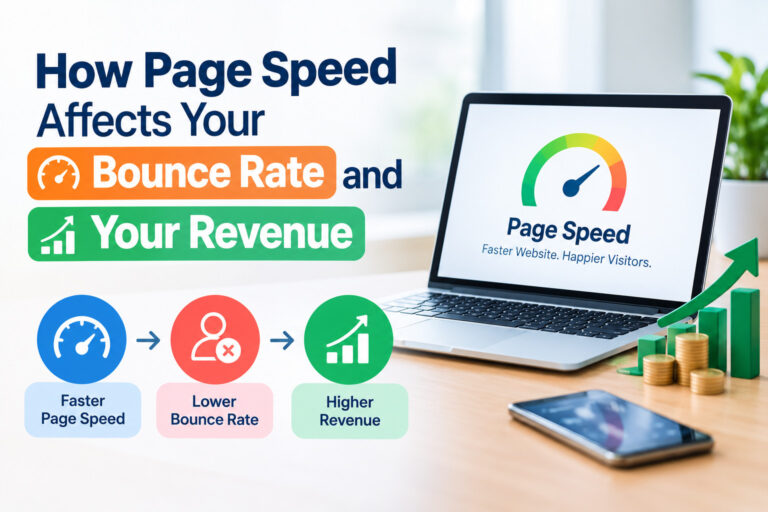
That quiet loss is what bounce rate measures, and page speed is one of its biggest drivers. If you run a company in Northeast Ohio, a slow site can drain leads, calls, and sales every day. It is also why good Ohio Website Development starts with how fast a page loads, not just how good it looks.
What Bounce Rate Actually Tells You
A bounce happens when someone lands on one page and leaves without taking another step. They did not click to a second page, fill out a form, or call. In Google Analytics 4, the closely related number is engagement rate, which counts a session as engaged if it lasts longer than 10 seconds, includes a conversion event, or has at least two page views. Bounce rate in GA4 is simply the opposite of engagement rate.
A high bounce rate is not always bad. A visitor who finds your address on a contact page and leaves has done what they came to do. The problem shows up when people bounce from pages meant to start a conversation, such as your homepage, service pages, or ad landing pages. When those pages lose people fast, check speed first, because a visitor cannot judge your offer if the page never finishes loading.
How Slow Pages Push Visitors Away
The Numbers Behind the Wait
Google’s research, published through Think with Google, studied mobile load times and found that the chance of a bounce rises 32 percent as a page goes from one second to three seconds. From one second to five seconds, it rises 90 percent. At ten seconds, it climbs 123 percent.
Those figures are a few years old, but the behavior behind them has not changed. People expect a page to respond almost right away, and their patience shrinks every time another site loads faster than yours.
Mobile Makes It Worse
Most local searches happen on a phone, often on a cellular connection, often in a hurry. Someone searching for a dentist, a plumber, or a restaurant wants an answer in the next minute. Heavy images, bulky scripts, and pop-ups that run fine on an office computer can crawl on a phone in a parking lot. If your site was built for desktop first, mobile visitors pay for it in wait time, and they leave.
The Link Between Speed and Revenue
Every Second Touches the Sales Path
Think of your site as a path with several steps: land on the page, read the offer, click, fill out a form or add to cart, and finish. A slow load hurts the first step, but delays later on add up too. A form that takes four seconds to submit, a checkout page that stalls, or a booking calendar that freezes all give people a reason to stop.
A study by Deloitte for Google, called Milliseconds Make Millions, tracked retail and travel sites. It found that a 0.1 second improvement in mobile load time raised retail conversions by 8.4 percent and average order value by 9.2 percent. A tenth of a second is barely noticeable to a person, yet it moved real money.
What a Slow Site Costs a Local Business
Here is a simple example with round numbers. Say your site gets 2,000 visits a month and 3 percent of visitors become leads, which is 60 leads. If a slow homepage pushes away 15 percent of those visitors before they act, you lose about 9 leads a month. If you close one in three and each job is worth $800, that is roughly $2,400 a month, or close to $29,000 a year, gone because pages were slow. Your numbers will differ, but the math works the same way for any business that takes leads online.
Speed Affects Trust, Not Just Patience
Visitors read speed as a sign of how a company runs. A page that stalls suggests a business that is careless or out of date, even when the service itself is excellent. For businesses where trust drives the decision, such as medical offices, law firms, and contractors who work inside a customer’s home, that first impression carries weight. A quick, stable page says someone is paying attention.
Speed also affects your ad budget. If you pay for Google Ads, a slow landing page means you pay for clicks that never turn into anything, and landing page experience is part of how Google scores your ads. Poor scores can raise your cost per click.
Speed, Google Rankings, and Helpful Pages
Google has said for years that page experience is part of how it ranks pages, and speed sits at the center of that. Its helpful content guidance asks for pages written for people first, and a page that frustrates people with delay works against that goal. Speed alone will not carry a weak page to the top, because relevance and content quality still matter most. But when two pages are equally useful, the faster one has the edge, and it keeps the visitor around long enough to read what you wrote. That is why a trusted SEO Company Ohio businesses rely on will check your page speed and Core Web Vitals alongside keywords and content, since all three work together to earn better rankings.
Core Web Vitals in Plain Language
Google measures page experience through three main metrics called Core Web Vitals:
- Largest Contentful Paint (LCP): how long the biggest piece of content, usually a hero image or headline, takes to appear. Aim for 2.5 seconds or less.
- Interaction to Next Paint (INP): how quickly the page reacts when someone taps or clicks. Aim for 200 milliseconds or less.
- Cumulative Layout Shift (CLS): how much the layout jumps around while loading. Aim for 0.1 or lower.
Common Reasons Websites Load Slowly
Most slow sites share the same handful of problems. Photos are the biggest offender: a 4 MB image straight from a camera or stock site can outweigh the rest of the page combined. Next are too many plugins and add-ons, especially on WordPress, where every extra tool adds code that has to load. Cheap shared hosting is another common cause, since a slow server delays everything before the page even starts to draw. Other culprits include chat widgets, tracking scripts, auto-playing video, unused fonts, and code left behind from old redesigns. Each one seems small, but together they add seconds.
How to Check Your Own Site Speed
You do not need special software. Google’s PageSpeed Insights is free. Paste in your URL and it reports scores for mobile and desktop, plus Core Web Vitals data from real visitors where available. Test your homepage and your top two or three service pages, since those are the ones people land on. Run each test a couple of times, because results shift slightly. Then open your site on your own phone using cellular data instead of Wi-Fi. If it feels slow to you, it feels slow to your customers.
If you would rather have someone read the report and explain it in plain English, you can book a free website audit with the Be Found Next team, and we will point out what is slowing your pages down.
Fixes That Make the Biggest Difference
Start with images. Resize them to the size they display, compress them, and use modern formats like WebP. Add lazy loading so images below the fold load only when someone scrolls to them. Next, trim your plugins and scripts to the ones that earn their place. Turn on caching, and use a content delivery network so visitors load files from a server near them. Choose hosting that matches your traffic instead of the lowest monthly price. Finally, load fonts sensibly and reserve space for images and ads so the layout does not jump. Work through these in order, test after each change, and you will usually see a clear gain without rebuilding anything.
Some people worry that a fast site has to look plain. It does not. Good design and speed work together. The trick is choosing a few strong visuals, sized properly, instead of many heavy ones.
Sometimes patching is not enough. If a site sits on a heavy theme and years of add-ons, a rebuild with speed as a requirement costs less over time than endless fixes.
How Be Found Next Builds Fast Websites
At Be Found Next, our Ohio Website Development process treats speed as a requirement from the first wireframe. We write clean code, compress and size media before it goes live, limit plugins to what a site needs, and test on real phones before launch. After launch we keep checking Core Web Vitals, because a site that was fast in January can slow down by June as content and plugins pile up. Pages are also built to turn visitors into calls, bookings, and form fills, so speed and results are handled together.
Why Speed Matters for Ohio Businesses
Local competition is tight in many Ohio markets. A dentist in Avon, a contractor in Westlake, or a restaurant in Cleveland competes with several others for the same search, and the person searching often picks the first site that loads and answers their question. Choosing Ohio Website Development that treats speed as a must-have helps you win those moments. Pair a quick site with a well-kept Google Business Profile and clear local pages, and you give nearby customers an easy path to reach you.
Ready to See How Fast Your Site Really Is?
Slow pages raise bounce rate, lost visitors mean lost leads, and lost leads mean lost revenue. The good news is that speed problems are usually fixable, and the gains show up quickly in the traffic you already have. Fast pages are a core part of good Ohio Website Development, and they are one of the simplest ways to get more from every visit.
If your site feels slow, or you are not sure, the Be Found Next team will review it and give you a clear list of fixes. Book your free website audit or contact us and we will get started.
